


AUTHOR LINKS
John Buchan
John Buchan was born in Perth, the eldest son of the Rev. John Buchan. He grew up for a time in Fife, before moving with his family to Glasgow. He holidayed with his grandparents in the Scottish Borders.
Buchan was schooled at Hutchesons’ Grammar School in Glasgow and then studied Classics at Glasgow University, where he wrote poetry and first became a published writer. He then went on to Brasenose College, Oxford, where he studied law. He had to take another first degree at Oxford, as his degree from Glasgow University was deemed unsatisfactory. While at Brasenose Buchan continued his writing and won the Stanhope Essay Prize in 1897 and the Newdigate Prize for Poetry in 1898. After graduating from Oxford, he started a short-lived career in law, in 1901, before moving quickly into politics. He became the private secretary to Alfred Milner, who was High commissioner for South Africa, Governor of Cape Colony and Colonial Administrator of Transvaal and the Orange Free State. His time with Milner allowed him to become well acquainted with a region that would be a recurring setting in his writing.
On his return to London, in 1903, he became a partner in the publishing firm Thomas Nelson and Sons where he continued to write and publish his own works and for a time virtually edited The Spectator. In 1907 he married Susan Charlotte Grosvener, a cousin of the Duke of Westminster, and they had four children. Buchan had his first novel, Sir Quixote of the Moors, published in 1895, but in 1910, the first of his adventure novels, Prestor John, was published. During World War I he wrote for the War Propaganda Bureau and was a correspondent for The Times in France.
In 1914, whist recovering from illness, Buchan wrote his best known book, The Thirty-Nine Steps, which was published in 1915. This, his 27th book, introduced us to the British hero Richard Hannay, who was based on an old friend of Buchan’s from his South African days, Edmund Ironside.
In 1916 the sequel to The Thirty-Nine Steps, Greenmantle, was published. In this year Buchan joined the British Army Intelligence Corps, where he composed speeches for Sir Douglas Haig. Under Lord Beaverbrook, in 1917, he became the Director of Information. After the war Buchan became a director of the news agency, Reuters, and continued his interest in politics.
The Thirty-Nine Steps was by far his most famous novel and it has been filmed three times, the first being directed by Alfred Hitchcock. However, Buchan wrote much more widely than adventure tales: his output included poetry and biographies, including Sir Walter Scott, Caesar Augustus, Oliver Cromwell and Julius Caesar.
Buchan’s political endeavours saw him twice the Lord High Commissioner to the General Assembly of the Church of Scotland. In 1927 he was elected, in a by-election, as a Scottish Unionist MP for the Scottish Universities, a post he held until 1935.
In 1935 he became the 15th Governor General of Canada. The Canadian Prime Minister, William Lyon Mackenzie King wanted Buchan to take the post as a commoner, but King George V wanted to be represented by a peer, and so Buchan became the 1st Baron Tweedsmuir of Elsfield. Both Buchan and his wife took their roles in Canada seriously. Lady Tweedsmuir was active in promoting literacy in Canada, using Rideau Hall as a distribution centre for 40,000 books that were sent to readers in the remote west of the country, and this became known as The Lady Tweedsmuir Prairie Library Scheme.
John Buchan was recognised by Glasgow, St. Andrews, McGill, Toronto and Montreal Universities, which all conferred him Doctor of Law. He was made an Honorary Fellow and Honorary D.C.L. of Oxford University.
He died while still in office as Governor General of Canada. He never stopped working.
BOOKS BY John Buchan
-

The Complete Richard Hannay Adventures: eBook Bundle

-
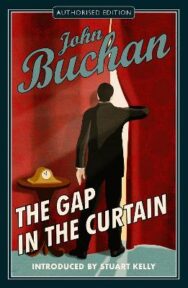
The Gap in the Curtain
-

The Gap in the Curtain
-

The Gap in the Curtain
-

Midwinter
-

The Thirty-Nine Steps
-

The Thirty-Nine Steps – Foxton Readers Level 5 – 1700 Headwords (B2) Graded ELT / ESL / EAL Readers
-

The Thirty-Nine Steps
-

The Thirty-Nine Steps
-

Prester John
-

Oxford Bookworms Library: Level 4: The Thirty-Nine Steps
-

Great Writers on the Great War: Buchan’s War
-

The Gap in the Curtain
-

Huntingtower
-

The Thirty-nine Steps
-

Greenmantle
-

A Lost Lady of Old Years
-

The Three Hostages
-

Mr. Standfast
-

The Best of John Buchan: 3 Rip-roaring John Hannay Thrillers: “The Thirty Nine Steps” , “Greenmantle” , “Mr Standfast”
-

The Free Fishers
-

The Strange Adventures of Mr Andrew Hawthorn and Other Stories
-

Greenmantle
-

Huntingtower
-

Midwinter
-

John Burnet of Barns
-

Witch Wood
-

The Blanket of the Dark
-
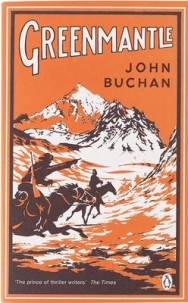
Greenmantle
-

The Oxford Bookworms Library: Stage 4: the Thirty-Nine Steps
-

The Power-House
-

Sick Heart River
-

The Dancing Floor
-

John MacNab
-

The Thirty-nine Steps
-

Greenmantle
-

The Thirty-Nine Steps
-

The Massacre of Glencoe
-

Supernatural Tales
-

The Thirty-Nine Steps
-

The Complete Richard Hannay: “The Thirty-Nine Steps”,”Greenmantle”,”Mr Standfast”,”The Three Hostages”,”The Island of Sheep”
ALSO ON BOOKS FROM SCOTLAND
-


‘‘That’s right, Bobby,’ he growled. ‘I haven’t seen you in – well, since you decided to kill me.’ ‘
-

David Robinson Reviews: Solitary Agents by David Goodman
‘This is very much an up-to-the-minute story of spycraft, positively revelling in all the things tha …
-

The Savage Landscape by Cal Flyn
‘It is their resistance to the intrusions of the outside world − culturally, economically, environme …
-

The Shortest History of Scotland: A Q & A with Murray Pittock
‘We need to be better aware of that to understand the challenges and achievements of the past, and t …
-
David Robinson Interviews: John Lister-Kaye
‘I enjoy stillness. It creeps up on you and becomes almost a force. I’ve had squirrels run over my f …
-

Spring 2026 Round Up of Scots & Gaelic Releases
‘Discover Jansson’s uninhibited imagination full of love, kindness, and adventure.’
FEATURED AUTHOR:
Craig A. Smith
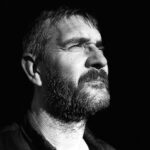
Craig Smith lives in Musselburgh. He’s been many things in his time, but by far the most challenging was washing dishes in a Mexican restaurant (all that baked-on cheese is a nightmare to clean). Nowadays, when not making a living designing websites, h …
FEATURED PUBLISHER:
Museums Etc
MuseumsEtc is an independent publishing house based in Edinburgh and specialising in books on photography and books for museum and gallery professionals. For us, books are just the starting point for cultural action, involvement and education. And for …