'Beautiful House, White House': extract from The Shadow Behind the Sun

Shadow Behind the Sun

Shadow Behind the Sun - Remzije Sherifi
Remzije Sherifi

In August we moved into the new house, next door to an old couple, Rama and his wife Nafi, and just four houses along from what had been Sherife’s house. Nafi was temporarily bed bound after an operation but the old man was fit and mobile. Ferat had recently remarried and lived there with his new wife. My nephew Adonis, Ferat and Sherife’s younger son, had also recently married and lived with them with his wife and their new baby. The older boy, Albert, remained in Prishtinë with our dog, Beta.

Against all that had happened and was likely to happen I was determined to make a home for my family. This was the home I had dreamed of and waited for so many years to enter. I wanted it to be warm and for them to enjoy living here. It felt almost that I could hold no more anxiety and now was compelled to make room for what is good. To my youngest son’s delight we acquired another dog.

Part of this home building was good relations with our neighbours and we made particular friends with Rama and Nafi, whose adult children, two sons and a daughter, had fled seven years before rather than be conscripted into the Bosnian war. Now my boys would do the old couple’s shopping and cut their firewood. I still missed Fehime and so was pleased to help Nafi in every way I could, even to the extent of nursing her. She would say after our arrival, ‘May God repay your goodness.’

The times were hard but I took refuge in the creation of a ‘normal’ life. Between us, my husband and I made the house a home and I fed the family as well as I could with, of course, Sherife’s words still in my ear. ‘Your first responsibility is to those within your doorstep.’

Of course there was no holding the outside world at bay for long. In January another atrocity occurred in Raçak with another slaughter. I was working in the garden one day when Rama came by, his mind and long memory occupied. ‘White house, beautiful house,’ he said, ‘but why are you making a target for them?’

Perhaps we were, but my husband and I were encouraged by events on the international scene. NATO troops had already been assembled in Macedonia. In February the Rambouillet Conference began and, at last, President Rugova was present and therefore recognised. Robin Cook was also present. By March an agreement had been prepared that would safeguard at least our immediate future because Serbia refusing to sign carried with it the certainty of a NATO bombing campaign.

In Kosova we felt that somehow, through the diplomatic mist, Milosevic was staring into the eyes of Robin Cook and that Foreign Secretary Cook would not go home empty handed again. Milosevic would surely not hold out against the inevitable, against the prospect of a bombing campaign that Serbia could not withstand for long. The forces now arrayed against them were infinitely greater than they could muster in defence. The Serbian population, mostly innocent people, would suffer needlessly. No one could believe that he would refuse to sign. Only a madman would hold out.

He refused to sign.

At first we did not really believe the bombing would happen, but when the few European observers in Kosova were evacuated we took it for a sign. On 24th March the first bombs fell. News spread like wild fire.

The planes have taken off from Italy!
The ground shook under our feet.
They’ve attacked the paramilitaries here in Kosova!
A squadron of bombers passed high overhead.
They’ve hit Belgrade!

We knew that reprisals would be directed against us and that the numbers of Serbian soldiers in Kosova had already increased. They had automatic rifles, tanks and other sophisticated arms and, without weapons, we had no idea how we might defend ourselves. I went into town to buy first aid equipment and medicines and found that people were buying up flour to make bread, buying food and all kinds of consumables against who knew what length of time.

When I got home Shemsi and Afërdita were waiting to suggest we take refuge in a basement nearby. I asked about my two brothers who lived in that area and about whom we had heard nothing. With its mixed population we swung rapidly from believing that it might be safer for them there to thinking, no, it would be much worse, and back again. With no telephone there was no contact. We worried about Albert, who had been working for the OSCE in Prishtinë. With his employers evacuated, as they must have been, how safe would he be?

Instead of going into the basement we spent that first night with Rama and Nafi, remaining close for protection and comfort. Also with us were another neighbour, Ramadan, his wife and children, boys of an age with my younger two.
There was to be no sleep. In the distance we heard explosions, gun shots, machinery, and we knew that our turn would come. If not this night, it would be the next, or the night after that. Somehow we had to deal with our fear and in this our wise, old neighbour Rama was wonderful. He gathered us round him and told us stories of his experiences in the Second World War. He told his stories well and the boys listened with rapt attention, their minds in what was for them the distant past.

When it was time to leave in the morning we said we would come back the next night, but Rama said, ‘No, you must find somewhere more secure than this. Did you mention a basement close to here?’

The second night we went down to the centre of town as a family. And yes, in one of the big houses there was a hidden basement, its opening hidden with a carpet. There on the cold, concrete floor we spent the night with about a hundred others, dreading the moment when the trap door above might be thrown open, listening as the explosions grew closer.

On the third night I took a carpet into the basement for the mothers of younger children to use, but now still more people had arrived. There was not enough space and we were asked to divide our family. I was to remain in the basement with our youngest son while my husband stayed with the older boys upstairs. We went along with this at first but I could not bear it to have the family separated. I took my youngest son by the hand and we went upstairs to find the others. After a short discussion we decided we would return home and let whatever happened happen. Against the possibility of even violent death we would not be parted.

That night we listened to the news on a battery radio, but it was impossible to be sure of anything. The middle and younger boys were exhausted and slept in their clothes on armchairs but our oldest could not sleep any more than we could. By this time he was eighteen years old and very mature and, before we could stop him, he slipped outside to keep watch.
About midnight the village of Llashtica, only six kilometres away on the other side of the hill, was attacked. At night sound travels far, we heard explosions and gunshots and fighting. Understanding my oldest son was now a young man I asked my husband to go outside and speak to him and ask him to stay close. Our son simply told him, ‘I am not going anywhere’, and there was no point in arguing. We all understood that events were working towards some kind of conclusion.

Next day was the Feast of Eid, an important Muslim celebration. Although we had very little to celebrate I decided to make a good meal after so many days of sandwiches. Potato soup and rice: they were the best I could do in the circumstances. We sent some round to Rama and Nafi and so between us, in the hallowing of our traditions and in the giving and receiving of hospitality, asserted our humanity in time of war. With this gesture, and as so often in those days, I felt that Salihe and Sherife were close in spirit.

Outside I joined the boys. It was a bright day and the youngest pointed to a light, a reflection, on the hill opposite that held the underground army base. ‘I’ve never noticed that disc before,’ I said. ‘It seems to have sprung up overnight.’

Although we could not see it, in the forest a chain saw was being used to cut timber, and we could hear other, heavier, machinery. We could even hear voices. My oldest son had been watching military trucks and APCs travel back and forth for hours. It was not only the Serbian Army. With the soldiers were paramilitaries and other irregulars. My oldest boy looked at me.

‘They’re coming for us,’ he said.

Extract from Shadow Behind the Sun by Remzije Sherifi with Robert Davidson used by kind permission of Sandstone Press, and remains ©Remzije Sherifi with Robert Davidson

  • Cover scan of Shadow Behind The Sun
    Shadow Behind The Sun Remzije Sherifi
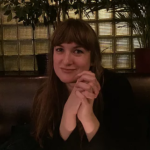
    In 'Shadow Behind The Sun', Remzije Sherifi tells her own story, and that of her family, in the context of a deteriorating political environment that led over a number of years to the attempted ethnic cleansing of Kosova.